
A strategic corridor parallel to Sheikh Zayed Road, featuring a 15 km-long elevated carriageway with three lanes in each direction, is among key projects approved by Dubai’s Executive Council, alongside AED 18 billion worth of broader development initiatives.
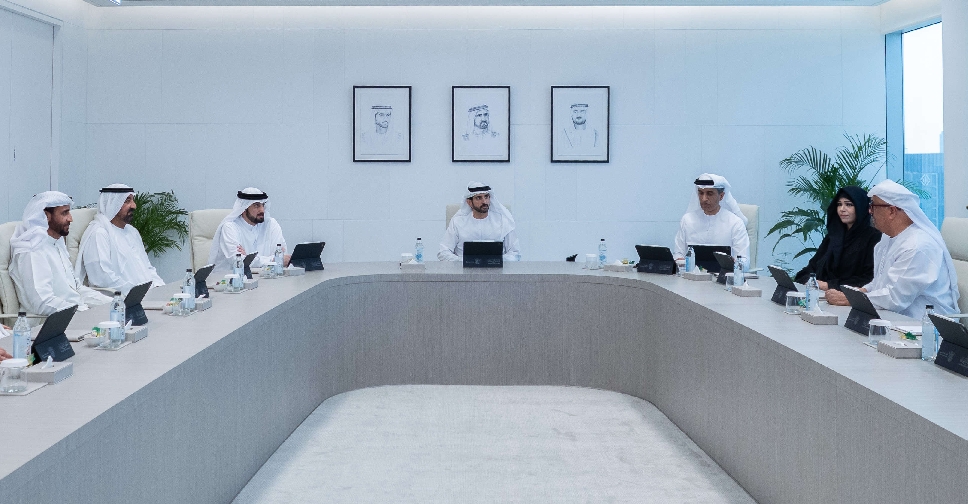
The projects, spanning culture, trade, infrastructure, Emiratisation, finance, investment, urban planning and population data, were announced during a meeting chaired by His Highness Sheikh Hamdan bin Mohammed bin Rashid Al Maktoum, Crown Prince of Dubai and the UAE's Deputy Prime Minister and Minister of Defence.
The new road corridor is part of the First Al Khail Street Development Plan, which is expected to reduce travel time on Sheikh Zayed Road by 51 per cent during peak hours.
It will serve 2.6 million people, also providing access to Al Barsha, Al Quoz, Business Bay and Meydan.
Construction will start in Q3 2027 and end in Q4 2030, deploying innovative technologies to accelerate delivery without affecting traffic movement in the area.
Also approved are a strategy to boost Emirati talent in private education, a unified Dubai Investor Register, a new visual identity for the emirate’s address system, and the launch of a Global Centre for Technology and Innovation in Islamic Finance.
Other projects include a real-time population monitoring system, the Dubai Cultural Strategy 2033, and a strengthened Dubai Customs Strategy.
Sheikh Hamdan said Dubai continues to turn ambition into action and build a city that plans for the future while delivering for the present, in line with the vision of His Highness Sheikh Mohammed bin Rashid Al Maktoum, Vice President and Prime Minister of the UAE and Ruler of Dubai.
Projects approved by The Executive Council:
— Dubai Media Office (@DXBMediaOffice) July 1, 2026
- Dubai Cultural Strategy
- Dubai Customs Strategy
- First Al Khail Street Development Plan
- ‘Dubai Population Now’ Real-Time Population Census and Growth Monitoring Initiative
- Emirati Talents Strategy in Private Education
- Dubai… pic.twitter.com/665ARlV3cK
Dubai Cultural Strategy
The Council has approved a cultural strategy that aims to support over 6,000 local talents, and raise the sector’s GDP contribution to 5.4 per cent. It will also attract more than 6,000 international creatives and increase Dubai’s cultural asset footprint by over 200 per cent.
As many as 40 initiatives will be outlined, with special focus on innovation, design challenge and talents development.
The move aims to position Dubai as a leader in cultural innovation and collaboration rooted in the UAE’s heritage, while establishing the city as a global hub for talent.
The Dubai Cultural Strategy 2033 will be led by Her Highness Sheikha Latifa bint Mohammed bin Rashid Al Maktoum, Chairperson of the Dubai Culture and Arts Authority.
"Dubai will embark on an ambitious new path that... make the city a global cultural reference, rooted in the UAE’s heritage, pioneering innovation and talent," Sheikh Hamdan added.
"Under the leadership and vision of His Highness Sheikh Mohammed bin Rashid Al Maktoum, Dubai has become synonymous with ambition and achievement. Our development journey continues, our momentum never slows, and our initiatives keep evolving. The future will always be brighter… pic.twitter.com/tbM9XNUeRs
— Dubai Media Office (@DXBMediaOffice) July 1, 2026
Dubai Customs Strategy 2030
It focuses on facilitating trade, strengthening economic partnerships, enhancing security and compliance, and improving the customer and partner experience. The strategy aims to ensure seamless trade, boost Dubai’s global competitiveness, protect communities, and consolidate Dubai’s position as a global trade hub.
Emirati Talents Strategy in Private Education
The newly approved Emirati Talents Strategy in Private Education aims to boost Emiratisation in the private education sector by targeting 3,000 nationals by 2033. It aims to put special focus on “percentage of Emiratis in teaching roles and turnover rates”.
Among the host of initiatives outlined were Teacher Qualification and Accreditation Academy and a “pathway” to employ retirees.
Dubai Investor Register
It's a unified register for all institutions and individuals operating or investing in Dubai, supporting the Dubai Economic Agenda, D33’s target of AED650 billion in foreign direct investment by 2033. The register allows companies and investors to operate across multiple zones without re-registering, meets Financial Action Task Force requirements, and reduces costs and operational burdens by unifying procedures and data.
The Executive Council also approved a visual identity for Dubai’s address system, giving address signage a distinctive urban character inspired by the emirate’s environment and classified by urban sector. This initiative enhances the identity of different areas and contributes to improving geographic orientation and ease of navigation, in line with international best practices. The system will expand to cover transport and residential services, with implementation across 186 areas by 2029.
“Just as we nurture the cultural landscape, we consolidate our mission across every dimension of the city, including the way we plan our urban areas, harness data for policymaking, empower our people, attract investment, and support new sectors. Today’s approvals reflect the breadth of Dubai’s ambitions and the depth of its commitment to its residents and generations to come," highlighted Sheikh Hamdan.

 UAE sends more relief aid to flood-hit Nepal
 UAE denies reports Al Minhad Air Base was targeted
 UAE and South Korea hold joint military exercise
 UAE forces intercept drone over territorial waters
 Emirati women strengthen Dubai Government’s talent base